The Sun, your skin and sunscreen protection
UV radiation is by far the most damaging form of solar radiation, even though it only accounts for the minority of total solar radiation. So what are the other forms of solar radiation, and do we need to worry about them?
Solar radiation mainly consists of 51-53% infrared radiation, 39-44% Visible Light, and, of course, 3-7% UV radiation. So why is UV radiation the most damaging?
UV radiation is the most damaging due to its shorter wavelength which means that it has more energy than Visible Light or infrared radiation.
However, Visible Light is made up of multiple wavelengths, and therefore multiple energies, and is the light that can be seen with the naked eye. High energy Visible Light (HEV) or blue light has a wavelength that starts at 400nm. This means that it is pretty close in length to UVA rays and has the potential to cause skin damage.
Visible light and, to a much lesser extent, infrared radiation can produce harmful free radicals. As antioxidants can neutralise free radicals, it is beneficial to include them alongside sunscreen to increase overall photoprotection. In addition, mineral sunscreens can offer more protection against visible light than chemical sunscreens, particularly when they also include iron oxides.
-
UVA vs UVB - What’s the difference? .
Here are some UVFacts:
☀️ UVA has a longer wavelength (315nm-400nm) compared to UVB (280nm-315nm).
☀️ UVA radiation makes up the majority of UV radiation.
☀️ As UVB rays have a shorter wavelength, they also have more energy than UVA rays.
☀️ Both UVA & UVB can cause sunburn but it takes a lot longer for UVA to cause sunburn.
☀️ UVA exposure is usually constant all year round, whereas UVB exposure occurs more in summer.
☀️ UVB has stronger links to skin cancer than UVA.
☀️ UVA is more strongly associated with skin aging.
☀️ UVA rays can pass through glass, whereas UVB rays are almost entirely absorbed by glass.
☀️ Sunscreens have to provide UVA protection of at least a third of the stated SPF in order to be considered broad-spectrum (I.e. SPF 30 would have to have UVA protection of at least 10).
-
Scientific Skincare Tip:
UVA rays are able to pass through glass! Did you ever see that infamous picture of the sun damaged truck driver? (You can find him in the New England Journal of Medicine if not). 28 years driving a truck left him with dramatic asymmetrical facial aging. The side of his face that was nearest the window was far more wrinkled and damaged!
Why? Because UVA rays pass through glass!It may seem silly to wear sunscreen indoors, but as this case study will tell you - it’s not as ridiculous as it seems! Just a little something to think about ☀️Did you know that skin cancers are more common on the side of the body closest to the window while driving? Scary right? Yet another good reason to be wearing sunscreen everyday - even if you spend the majority of your day indoors!
-
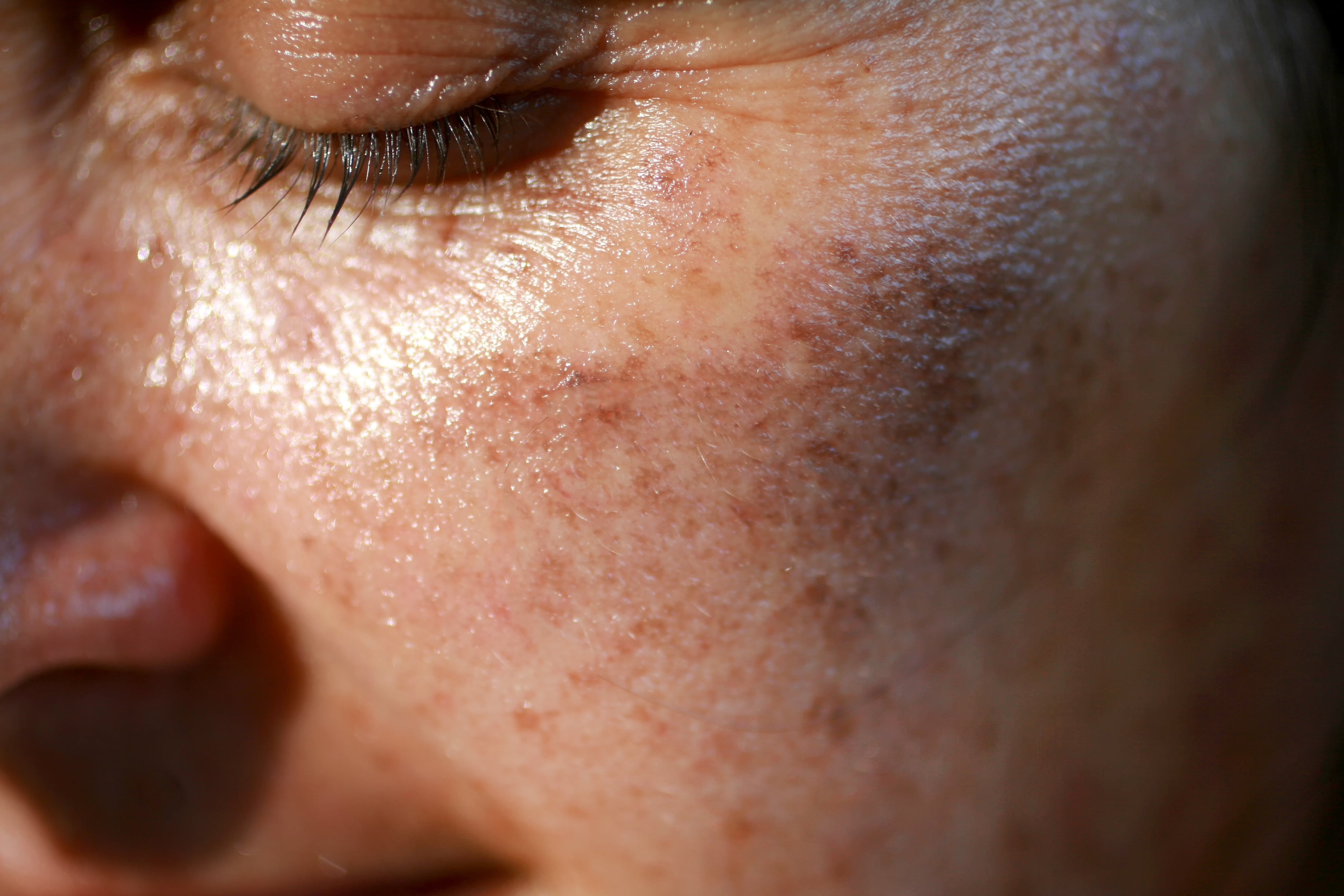
Scientific Skincare Tip: Mineral Sunscreens That Contain Both Zinc Oxide And Iron Oxide(s) Are Particularly Good For Those Prone To Disorders Of Pigmentation (e.g. Melasma).
.
Melanin as a chromophore (Light-absorbing molecule in the skin) has a particularly wide absorption spectrum. This means that it isn’t particularly selective about the wavelengths of light that it absorbs. Melanin is known to absorb wavelengths of light in the visible light spectrum as well as those in the UV spectrum.
.
While traditional sunscreens absorb UV radiation so that melanin doesn’t have to, they are not particularly good at absorbing visible light.
However, the addition of iron oxides into zinc oxide sunscreens can broaden photoprotection into the longer UVA and visible light spectrums.
This means that less visible light is able to be absorbed by melanin.
In one study, use of a zinc oxide + iron oxide sunscreen provided better improvement in melasma than a traditional sunscreen during hydroquinone therapy. Interestingly, some of the patients who used the traditional sunscreen also used makeup that contained iron oxides. However, this provided no additional improvement in melasma.
-
We often hear that UV radiation damages DNA, but how does this damage occur?
UV radiation makes up the minority of solar radiation yet it causes the most damage. This is due to the fact that shorter wavelengths of light/radiation have more energy than longer wavelengths. For this reason, UVA rays have less energy than UVB rays.
This energy is transferred to light-absorbing molecules in the skin called chromophores. In human skin, especially the epidermis, there are several key naturally-occurring chromophores that absorb UV radiation – DNA, urocanic acid, amino acids, and melanin.
When UV radiation is absorbed by DNA it can cause damage that can lead to genetic mutations. Usually, our cells correct this damage seconds after it has occurred, however, if the damage goes uncorrected, the genetic information may be permanently mutated.
One of the key cell regulators that can end up mutated as a result of DNA damage is the p53 tumour-suppressor gene which, as you may have guessed from the name, prevents the formation of tumours. If the key regulatory genes fail, cells with mutated genes can multiply uncontrollably and eventually result in skin cancer.
In fact, mutations in the p53 tumour-suppressor gene have been found in more than 90% of all squamous cell carcinoma (SCC) skin cancers and in approximately 50% of all basal cell carcinoma (BCC) skin cancers.
UVA and UVB rays damage DNA in slightly different ways. Due to UVAs longer wavelength and lower energy, it is not directly absorbed by DNA. Instead, it is absorbed by other, non-DNA, chromophores and causes the production of reactive oxygen species (ROS; a type of free radical). It is the ROS that then damage DNA rather than UVA itself.
In contrast, UVB radiation is directly absorbed by DNA, which suggests that it plays a larger role in the development of skin cancers than UVA radiation.
-
What Exactly Does Broad-Spectrum Mean?
The FDA uses the critical wavelength method to determine whether a sunscreen can be classed as broad-spectrum. The critical wavelength method measures the breadth of protection of a sunscreen across the UV spectrum (290-400nm). For a sunscreen to be considered broad-spectrum, it must have a critical wavelength of 370nm or more. This means that 10% of the protection that the sunscreen offers has to be for wavelengths above 370nm.
However, the critical wavelength method does not offer much information about the amplitude of UVA protection offered by a sunscreen, merely that it offers some UVA protection.
The EU requires that, in addition to meeting the critical wavelength requirement, the UVA protection offered by a sunscreen should be at least 1/3 of the stated SPF value. This means that a sunscreen with an SPF of 30 has to offer a UVA-PF of at least 10 in order to be considered “broad-spectrum’ in the EU.
-
There are three main steps involved in the increase in skin pigmentation after exposure to UV radiation – immediate pigment darkening (IPD), persistent pigment darkening (PPD), and delayed tanning or delayed pigment darkening (DT/DPD). IPD is a temporary darkening of pigment that occurs within minutes of UV exposure. It initially appears as a greyish colour before fading to a brown colour over a period of minutes to days and is a result of melanin oxidization and melanosome redistribution. It doesn’t appear to have any protective effect from UV radiation and is particularly activated by UVA rays.
PPD follows IPD and is a longer phase of tanning that appears brown in colour. Similarly to IPD, PPD is thought to be caused by melanin oxidization and is more strongly activated by UVA than UVB. However, PPD lasts at least 3-5 days. (PPD can be used to test the protection factor that sunscreens offer against UVA radiation). The last phase of tanning (DPD) is caused by an increase in melanin production, an increase in the number and activity of melanocytes, and increased transfer of melanosomes. DPD can be caused by either UVA or UVB and is first noticeable 2-3 days after sun exposure and usually lasts for at least 3-4 weeks before beginning to fade. DPD caused by UVB radiation seems to have a photoprotective effect while DPD caused by UVA radiation does not.
-
Melanin absorbs both UV radiation and visible light. When melanin is transferred from melanocytes to keratinocytes, it can create a ‘cap’ (a supranuclear melanin cap) above the cells nucleus (where the DNA is stored). These melanin caps can reduce UV transmission to DNA by absorbing the majority of UV radiation before it is able to reach the cells nucleus. This is concentration dependent in that the more melanin present in the ‘cap’, the more UV radiation is absorbed by the melanin and the less UV radiation is able to cause DNA damage.
Because darker skin contains more melanin, darker skinned individuals have a higher natural protection from UV-induced DNA damage as more melanin is available to absorb UV light before it is able to damage DNA. However, melanin itself only offers a sun protection factor (SPF) of about 1.5-4. Specifically, darker skin only appears to allow 7.4% of UVB and 17.5% of UVA to penetrate, while fairer skin allows 24% of UVB and 55% of UVA to penetrate.
-
How Does UV Radiation Cause Premature Skin Aging?! ☀️
UV radiation is responsible for approximately 80% to 90% of facial skin aging. This is due to the generation of reactive oxygen species (ROS) by UV radiation, particularly by UVA radiation. UV-light-induced ROS activate the transcription factors that regulate matrix metalloproteinases (MMPs) leading to an increase in MMPs. MMPs are enzymes that degrade matrix proteins such as collagen and elastin. This means that increases in MMPs lead to the destruction of collagen and elastin. Because of this, the destruction of collagen is considered a trademark of premature aging due to UV exposure (photoaging/photodamage). UVA rays are able to penetrate into the dermis (where collagen and elastin reside) which is why the association between premature aging and UVA is stronger than the association between premature aging and UVB.
-
How Does Sunscreen Protect Against UV Radiation?☀️
Sunscreens work in combination with biological photoprotection (melanin production) by absorbing or scattering UV rays and preventing them from reaching DNA and other skin components that are prone to damage from UV radiation.
Sunscreens can be organic (chemical), inorganic (physical), or a combination of the two. Chemical sunscreen filters are absorbed into the skin where they act as exogenous (external) chromophores. This means that the chemical filter molecule absorbs UV radiation instead of the naturally occurring chromophores (e.g. melanin and DNA). As it has no biological purpose, the chemical filter dissipates the energy it absorbs from UV radiation in the form of heat. Chemical filters can offer protection against the UVA and/or UVB spectrums.
Physical sunscreens act as a barrier on top of the skin and, like chemical filters, display broad absorption across the UVA and UVB spectrums. However, they also scatter the incoming UV radiation away from the skin. The absorption and scattering efficiency of physical sunscreen filters largely depends on the particle properties (e.g. diameter, surface, coating, etc.). Because of their scattering properties, physical sunscreens are considered photostable. However, if chemical filter molecules are unable to dissipate the energy from absorbed UV radiation fast enough, they may lose their photoprotective qualities and become unstable.
Basically, the chemical filter absorbs a photon of light and becomes energized. If it is unable to lose this energy, it is not able to absorb the next photon of light. This means that the second photon of light may be absorbed by DNA or melanin instead, which defeats the object of the chemical filter in the first place. Some chemical filters are more stable than others and those that are unstable can be stabilized when combined with other chemical filters.
-
How Can You Tell How Much UVA Protection A Sunscreen Has?
Part 1 - The UVA Seal.
Unfortunately, unless a sunscreen brand advertises its UVA-PF rating, there is no way to tell what the exact UVA-PF is. However, due to the regulations discussed above, we can tell what the minimum UVA-PF required is depending on the rating method.
First of all, we know that any sunscreen labelled as broad-spectrum in the US has to contain both UVA and UVB protection with a minimum critical wavelength of 370nm. However, this alone does not tell us how good the UVA protection is.
If a sunscreen contains the UVA seal (i.e. the letters U, V, and A in a circle) and/or is labelled as broad-spectrum in the EU, then we know that the UVA-PF is at least 1/3 of the SPF value (in addition to the critical wavelength requirements stated above). For example:
SPF 15 = UVAPF 5
SPF 30 = UVAPF 10
SPF 50 = UVAPF 16
SPF 50+ (a.k.a SPF 60) = UVAPF 20
-
How Can You Tell How Much UVA Protection A Sunscreen Has?
Part 2 - The PA System (PPD). The PA System is a little more straightforward as the rating doesn’t depend on the SPF of the sunscreen.
The PA+++ rating system for UVA-PF is determined by the in vivo PPD method correlates well with the in vitro COLIPA method used by the EU (the UVA-PF ratings mentioned in the last two posts) to the point that PPD response can be predicted by the COLIPA method with relative accuracy.
If a sunscreen has a PA+++ rating, then we have a rough idea of its UVA-PF.
PA+ = UVAPF between 2 and 4
PA++ = UVAPF between 4 and 8
PA+++ = UVAPF more than 8
PA++++ (added in 2013) = UVAPF more than 16.
The PA System uses only the PPD method for UVA-PF measurement, whereas EU regulations and the Boots Star Rating System can use either in vitro UVA-PF or the PPD System.
-
How can you work out how much UV radiation a sunscreen absorbs?
A: You may have seen people mention that SPF15 blocks 93.4% of UVB rays, SPF30 blocks 96.7%, and SPF50 blocks 98.1%, but where did they get these values?
As it turns out, this is what is called a logarithmic expression, which basically means that we can work out the percentage of UVB blocked with an equation if we know the SPF value.
This is due to the way in which the SPF value is determined. As mentioned above, SPF is worked out by dividing the amount of time taken for a UVB source to cause a sunburn response when the skin is protected by the amount of time taken when the skin is unprotected.
SPF = MED Protected/MED Unprotected
Essentially, this means that the SPF is a measure of how much longer a person can stay in the sun without burning when they are wearing sunscreen. Of course, it is not this simple as the strength of UVB rays varies throughout the day.
In theory, this means that a sunscreen with an SPF of 2 blocks 50% of UVB radiation as it takes twice as long for the skin to burn.
We can arrive at this percentage by using the following calculation:
100% – (100%/SPF) or 100 – (100/2) = 100 – 50 = 50%
For example, SPF 50:
100 – (100/50) = 100 – 2 = 98%
When it comes to measuring UVA protection, the PPD method uses the same method as SPF but with a different endpoint. In this case, it’s the amount of time taken for pigment to darken when protected with sunscreen divided by the time taken for pigment to darken when there is no sunscreen protection. For this reason, we can work out the % of UVA blocked by a sunscreen in a similar way if we know the PPD value.
As you can see in the chart above:
PPD 2 Blocks 50% of UVA
PPD 4 Blocks 75% of UVA
PPD 8 Blocks 87.5% of UVA
PPD 16 Blocks 93.8% of UVA
-UV radiation accounts for the minority of solar radiation but is the most damaging for skin.
UV radiation can be broken down into UVA & UVB. UVB rays are responsible for sunburn and are directly absorbed by DNA. This means that there is a strong link between UVB rays and skin cancer.
UVA rays account for the majority of UV radiation but have less energy than UVB rays due to their longer wavelength. The strength of UVA rays is relatively constant year-round and their longer wavelength means that they can penetrate the dermis and break down collagen and elastin which leads to premature aging. UVA rays are not directly absorbed by DNA but cause indirect damage through the generation of free radicals. UVA rays can be further broken down into UVA1 and UVA2. To prevent premature aging, a high UVA sunscreen should be worn daily.
-What % of UVB Radiation is Blocked by Different SPFs?
This is based on the fact that, in theory, a sunscreen with SPF2 would allow you to stay out in the sun twice as long without getting burned. In other words, it is blocking 50% of the UVB radiation.
It's important to note that this is theoretical and based on the laboratory testing of sunscreens (where the source of UVB radiation is constant). However, the strength of UVB rays varies throughout the day (they are strongest between 11am and 3pm) and are stronger in summer than in winter (at least in the UK and most countries in the northern hemisphere).